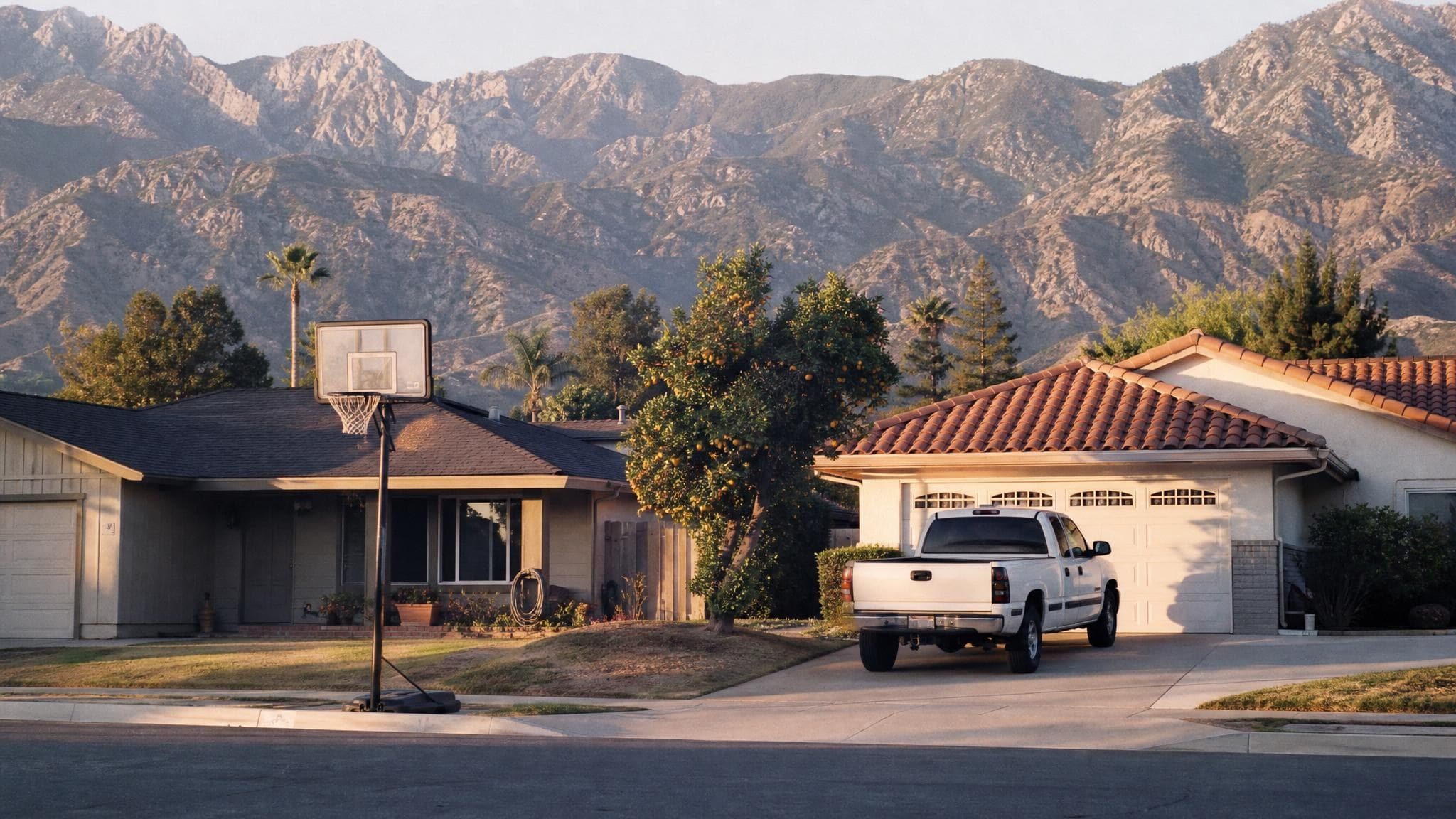
Refinance · Inland Empire
Refinance in the Inland Empire when today's rate beats the one you stretched for.
A refinance replaces your whole mortgage with a new one. If you stretched to buy in Riverside or San Bernardino County at a higher rate, easing rates can turn that stretch into real monthly savings. We run your break-even on a soft pull before you spend anything.
Set My Rate Alert →Free, no obligation. Soft credit pull, no score impact.Gold Standard Mortgage · NMLS #1779283Isaiah Wilburn · NMLS #1887173 · CA DRE #02204474
At a glance
- Typical Inland Empire home value runs roughly $550K to $620K as of early 2026, still the most affordable major SoCal market.
- Owners who bought or refinanced in 2020 to 2022 often locked a low rate worth protecting; many who moved inland more recently bought at a higher one.
- A HELOC reaches your equity without giving up a locked rate; a refinance pays off fastest for recent, higher-rate buyers.
- We run both on your actual loan with a soft credit pull, no impact on your score, before you ever apply.
The Inland Empire market, in plain terms
The Inland Empire is Southern California's inland growth corridor: Riverside and San Bernardino counties, east of Los Angeles and Orange County, where the region's newer subdivisions and master-planned communities keep getting built. Families relocate from coastal LA and OC for more house and a real yard, first-time buyers find a price they can actually reach, and the local economy runs on logistics, healthcare, and the universities, UC Riverside and Loma Linda among them. As of early 2026, a typical IE home runs roughly $550,000 to $620,000, with Riverside County generally higher and San Bernardino County lower. Treat any single figure as approximate; this market covers a lot of ground.
What sets the IE apart from the coastal metros is when its owners bought. Plenty locked rates in the 2020 to 2022 window and now hold real equity from the run-up that followed. But a large share bought more recently, often at the edge of what the budget allowed, because moving inland was how the numbers finally worked. That second group is carrying rates from the higher-rate years that followed, and for them refinancing is not a someday idea. It was the plan all along: buy the house first, then improve the loan as rates ease or income grows.
- Typical home value
- ≈ $550K–$620K (approx., early 2026)
- Common equity uses
- ADUs, multigenerational space, consolidation
- The local wrinkle
- Many owners bought recently at higher rates
- We serve
- Riverside and San Bernardino counties
Approximate typical Inland Empire home value, based on public market data through early 2026. Values vary widely by area and are not a valuation of your home.
Refinancing an Inland Empire mortgage
The Inland Empire is full of owners who bought the house first and planned to fix the financing later. Moving inland from LA or Orange County made the purchase possible, but plenty of those purchases closed during the higher-rate years of 2023 and 2024, sometimes with a payment that takes real discipline to carry. For those owners, a refinance is the follow-through. When rates ease below what you locked, or when a stronger income and credit profile qualifies you for better pricing than you got at closing, replacing the loan is exactly what the tool exists for.
The math still has to clear. IE balances are moderate by California standards, so a rate improvement saves fewer dollars per month here than it would on a coastal jumbo, while closing costs do not shrink to match. That makes the break-even month, the point where monthly savings have finally repaid your costs, the deciding number. It also means a small refinance can look good and still be a bad deal. We run your actual balance against realistic pricing, and if the break-even lands past the years you expect to keep the home, we tell you to wait and keep the alert on.
Illustrative example. Moving from 7.0% to 6.0% on an Inland Empire sized balance saves roughly $235 a month, repaying about $5,000 in closing costs near month 21. Your real numbers will differ, and we run them before you apply.
What we watch on an Inland Empire refinance
The IE's mix of recent buyers and moderate balances changes the standard checklist.
Recent buyers are the classic candidates
If you bought in 2023 or 2024 above 6.5 percent, you are who refinancing exists for the moment rates ease. Your alert watches your number, not the headlines.
Moderate balances need honest break-evens
On a mid-sized IE loan, a quarter-point drop may never repay your closing costs. We calculate the month it actually does, against your real balance, before you apply.
A better profile can mean better pricing
Rate is not just the market; it is also you. If your credit or income has improved since closing, or appreciation lets you shed mortgage insurance, you may qualify for meaningfully better terms than the loan you have.
A 2020 to 2022 rate is worth guarding
If you are in the other cohort, holding a low locked rate with equity from the run-up, a cash-out refi is usually the wrong tool. We run a HELOC beside it so you see the trade.
Neighborhoods and communities we serve in Inland Empire
- Riverside
- Rancho Cucamonga
- Corona
- Eastvale
- Fontana
- Temecula
- Ontario
- San Bernardino
Inland Empire refinance questions, answered
I stretched to buy in the Inland Empire at a high rate. When should I refinance?+
When the break-even clears, not at some magic rate. The test is whether the monthly savings at today's realistic pricing repay your closing costs within the years you plan to keep the home. For many 2023 and 2024 IE buyers that moment arrives with the first meaningful rate dip, and a soft-pull rate alert means you hear about it the day it happens instead of months later.
Do smaller Inland Empire balances change the refinance math?+
They do. Closing costs do not scale down as much as balances do, so the same rate drop that pencils easily on a $900,000 coastal balance can take years to pay for itself on a $450,000 one. That is not a reason to skip a refinance; it is a reason to run the break-even honestly first. We do that math against your actual loan, not a rule of thumb.
Can refinancing remove my mortgage insurance?+
Quite possibly, and in the IE it is a common win. Values rose through the 2020 to 2022 run-up, so if you bought with a small down payment and are now past 20 percent equity, a refinance can end the monthly mortgage insurance. On a conventional loan, a simple removal request sometimes works without refinancing at all. We check which route is cheaper for your loan.
I locked a low rate in 2021. Is there any reason to refinance now?+
Rarely for cash, because a cash-out refinance would reprice your whole balance to reach equity a HELOC could tap from second position. A shorter term you can comfortably afford, or dropping mortgage insurance, can still justify one. If neither applies, keeping your rate is the right call and we will say exactly that.
Where are mortgage rates in the Inland Empire today?+
Wherever the national bond market put them this morning, which is the honest answer no headline gives. Inland Empire mortgage rates are not a separate market: Riverside and San Bernardino County get the same pricing as everywhere else, shaped far more by your credit, equity, and loan size than by your zip code. The number that matters is the gap between the rate you hold and the pricing your file earns today, and that gap is exactly what a rate alert watches for you.
“Isaiah Wilburn was amazing. He supported us when we were uncertain about the process and kept a positive attitude the entire time. He helped keep us motivated through the chaos. Thank you, Isaiah!”
See when your IE refinance clears.
Set a rate alert and we will track your break-even against live pricing, then reach out when the improvement is real for your loan, not just in the headlines.
Set My Rate Alert →Free, no obligation. Soft credit pull, no score impact.Gold Standard Mortgage · NMLS #1779283Isaiah Wilburn · NMLS #1887173 · CA DRE #02204474