HELOC
HELOC vs cash-out refinance: which actually wins
By Isaiah Wilburn · Jul 20, 2026 · 6 min read

If you need cash out of your home, there are two main roads: a cash-out refinance or a HELOC. Both are secured by the same equity, and both put money in your account. The difference is what happens to the mortgage you already have, and that difference can be worth tens of thousands of dollars in one direction or the other.
Two ways to turn equity into cash
A cash-out refinance replaces your entire first mortgage with a new, larger loan and hands you the difference in cash. That word entire is the one to sit with. Every dollar you currently owe gets re-priced at today's rate, not just the new money. If you are holding a low rate from 2020 to 2022, a cash-out trades it away on your whole balance to get at the equity.
A HELOC takes the opposite approach. It is a separate line of credit that sits behind your first mortgage instead of replacing it. Your original loan, its balance, and its rate stay exactly where they are. You draw only what you need, when you need it, and you pay the HELOC's rate only on what you have actually drawn. The trade-off is that most HELOC rates are variable and higher than first-mortgage rates.
The rate you already hold decides it
Here is the comparison on illustrative numbers. Say your home is worth roughly 850,000 dollars, you owe 520,000 dollars on a first mortgage at 3.0 percent, and you want 110,000 dollars for a renovation. The HELOC path looks like this.
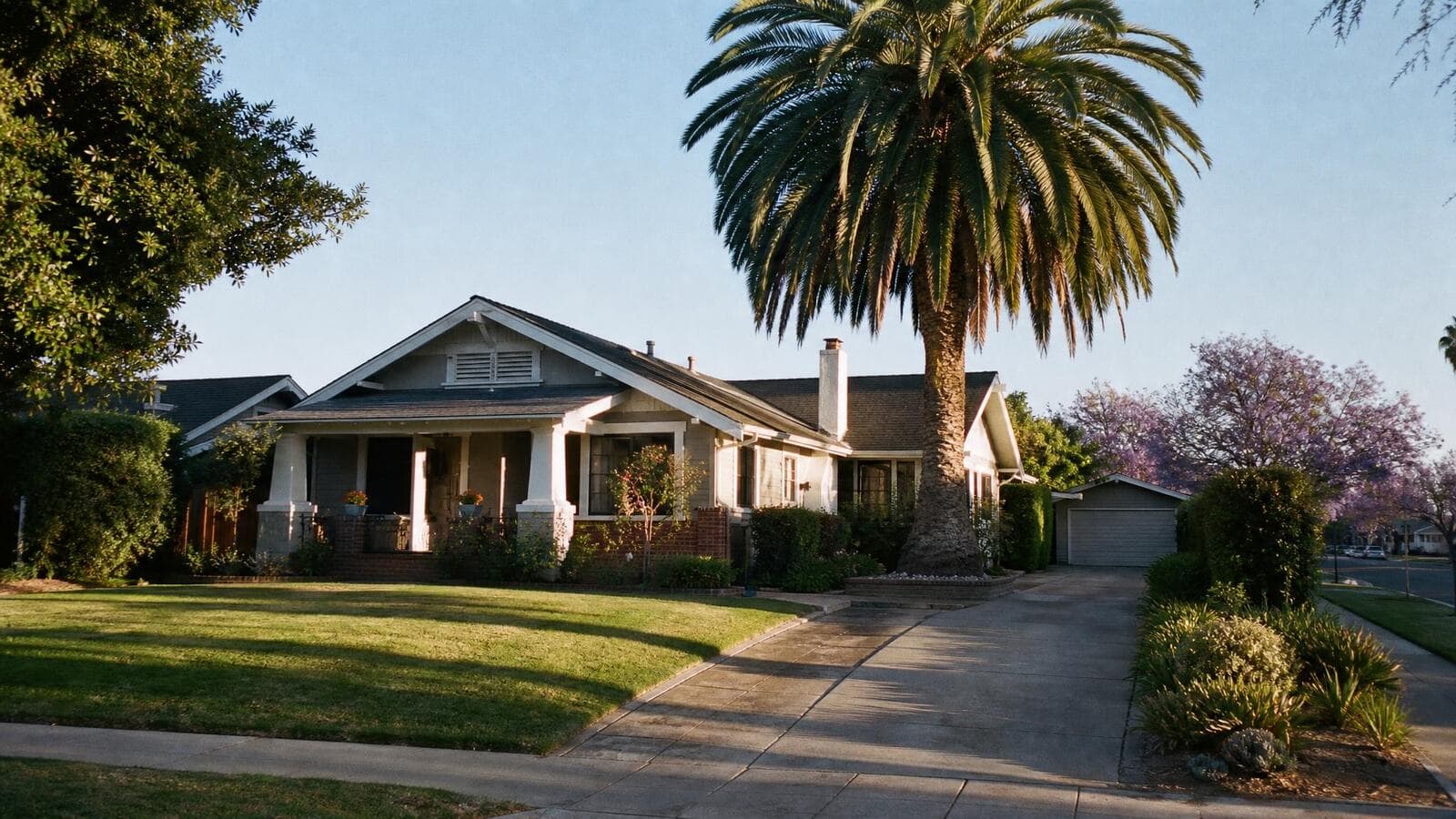
Illustrative only. On a hypothetical 850,000 dollar home, the 520,000 dollar first mortgage keeps its 3.0 percent rate while a 110,000 dollar HELOC draw comes out of the equity above it, with room to spare. This is not a valuation or a quote; your value, balance, and limits will differ, and we run your real numbers both ways.
Now run the cash-out path to the same 110,000 dollars. That means one new loan of roughly 630,000 dollars at today's rate, call it somewhere around 6.5 percent as of mid-2026. The 520,000 dollars you already borrowed at 3.0 percent moves up with it, which is roughly 18,000 dollars a year in extra interest, about 1,500 dollars a month, before the new cash has done anything for you.
Compare the blended rate, not the sticker rate
A HELOC at, say, 8.5 percent sounds worse than a 6.5 percent refinance until you notice what each rate applies to. In the example above, 520,000 dollars at 3.0 percent plus 110,000 dollars at 8.5 percent blends to just under 4 percent on the combined balance. The cash-out charges 6.5 percent on all of it. That gap is roughly 16,000 dollars a year in interest, a little less than the 18,000 figure above because the HELOC's higher rate on the smaller draw claws back some of the advantage, though keeping the first mortgage at 3.0 percent still does the heavy lifting. These are illustrative numbers and HELOC rates can move, but the shape of the math is the point.
When the cash-out actually wins
- Your current rate is at or above today's. If you bought in 2023 or 2024 near 7 percent, one new loan can lower your rate and hand you cash in the same move. There is no low rate to protect.
- You want one fixed payment. A cash-out is a single fixed-rate loan. Most HELOCs are variable, so the payment can drift with the market.
- You are borrowing a lot relative to your balance. The bigger the draw, the less your old low rate dominates the blend, and at some point the cash-out pulls ahead.
- You will carry the balance for many years. A variable rate on a small draw you repay quickly is a minor risk. A variable rate on a decade of carrying is not.
The question is never which product is better. It is what happens to the rate on the money you already owe.
Team Wilburn's Refis
How we run it for you
We run both paths against your actual loan, not a rule of thumb, using a soft credit pull that never touches your score. If the cash-out wins, we say so. If the HELOC wins, we say that. If neither pencils right now, we tell you to wait and keep watching. No application, no hard pull, no pressure.
Common questions
Can I get cash from my equity without losing my low mortgage rate?+
Yes. That is exactly what a HELOC is for. It is a second loan that sits behind your first mortgage, so your original balance, rate, and term stay untouched. You pay the HELOC's rate only on the amount you actually draw, not on the mortgage you already have.
Is a HELOC rate higher than a cash-out refinance rate?+
Usually, yes, and it is typically variable. But the sticker rate is not the whole story: the HELOC rate applies only to your draw, while a cash-out rate applies to your entire new balance. Compare the blended cost of keeping your first mortgage plus the HELOC against the cash-out rate on everything. On a low first-mortgage rate, the blend often wins by a wide margin.
When does a cash-out refinance clearly beat a HELOC?+
When your current rate is at or above today's rates, when you want one fixed payment instead of a variable line, or when you are borrowing so much relative to your balance that the old rate no longer carries the blend. We run both scenarios side by side on your real numbers so the answer is arithmetic, not opinion.
Is the interest on a HELOC or cash-out refinance tax deductible?+
Sometimes. Interest on equity borrowing is generally deductible only when the funds buy, build, or substantially improve the home securing the loan, and only if you itemize. The rules shift and depend on your situation, so confirm with a tax professional before you count on it. We do the loan math; a CPA should do the tax math.
This is part of our HELOC guide.
More on HELOC

HELOC
Home equity loan vs HELOC: pick by the shape of the expense
Same collateral, opposite personalities. One hands you a fixed sum with a fixed payment; the other waits until you need it. The expense itself usually makes the choice.
Sep 28, 2026 · 6 min read
HELOC
How HELOC rates actually work in California
The advertised rate is not your rate. Prime plus margin, teaser periods, caps, and the one stress test that keeps a line from becoming a problem.
Aug 31, 2026 · 6 min read