HELOC
Using a HELOC to fund a renovation or ADU
By Isaiah Wilburn · Jul 20, 2026 · 7 min read
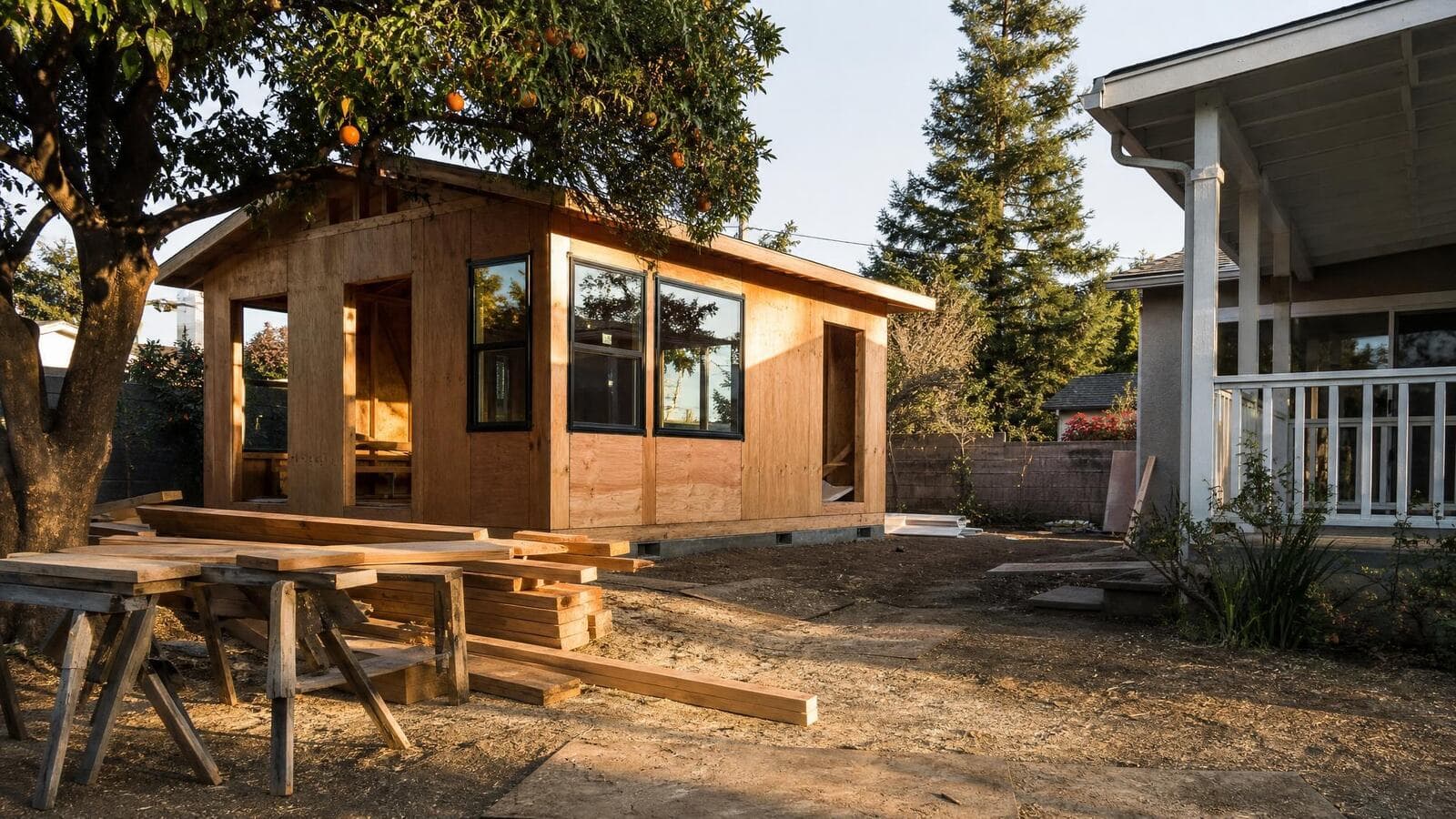
A renovation does not bill you all at once, and neither does an ADU. The foundation gets poured in month one, framing lands in month three, and the finish work shows up near the end. Most financing ignores that. A lump-sum loan hands you all the money on day one and charges interest on every dollar from day one, including the dollars that will sit in your account for months. A HELOC matches the way construction actually gets billed.
Why draw-as-you-go beats a lump sum for construction
A HELOC is a line of credit, not a loan balance. You get approved for a limit, and you draw against it as invoices come in. Interest accrues only on what you have drawn. On a project that bills in stages over eight to twelve months, that difference is real money.
Say your ADU will cost roughly 200,000 dollars, billed in stages over about ten months, and your HELOC prices at roughly 8 percent. (Illustrative only. Most lines are variable, and your rate will differ.) Borrowing the full 200,000 dollars up front would run roughly 13,000 dollars of interest during the build. Drawing as invoices arrive, your average balance during construction sits closer to 100,000 dollars, so interest runs roughly 6,500 dollars instead. That is around 6,500 dollars saved before the project is even finished, just from matching the borrowing to the billing.
Interest on what you use, not what you were approved for
An approved 250,000 dollar line with a 40,000 dollar balance charges interest on 40,000 dollars. The rest of the line just sits there, ready for the next invoice or the surprise behind the drywall. That standby capacity is the feature: construction has overruns, and a line absorbs them without a new loan application.
The California ADU wave is real
California has spent the past several years making ADUs dramatically easier to build. State law now requires cities to approve compliant ADU applications ministerially, generally within 60 days, and a series of bills through the early 2020s stripped away most of the parking, setback, and owner-occupancy rules that used to kill projects. The result: ADUs have gone from a zoning headache to one of the most common types of new housing permitted in the state.
The economics explain the volume. A backyard unit can rent for meaningful monthly income in most California metros, can house a parent or an adult child who is priced out of the local market, and generally adds appraised value to the property. Rental income, multigenerational living, and long-term value in one structure is a rare combination, which is why so many homeowners from Sacramento to San Diego are building them.
What an ADU roughly costs
- A detached new-build ADU in much of California runs roughly 150,000 to 400,000 dollars as of early 2026, depending on size, site conditions, and finishes.
- Garage conversions usually come in lower, often roughly 100,000 to 200,000 dollars, because the shell and the slab already exist.
- Utility connections, site work, and design and permit fees can add tens of thousands, and they vary block by block.
- None of these are quotes. Get two or three contractor bids before you size any financing, and leave headroom above the estimate.
Your first mortgage stays out of it
If you locked a rate in the 3s between 2020 and 2022, that rate is worth protecting. A cash-out refinance would re-price your entire balance at today's rates just to fund the project. A HELOC sits behind your first mortgage as a separate second lien: your original loan, its balance, and its rate do not change. Only the dollars you draw for the build get priced at the HELOC rate, and only while you owe them.
The most expensive way to fund a 200,000 dollar ADU is to re-price a 500,000 dollar mortgage to do it.
Team Wilburn's Refis
The honest trade-offs
- Most HELOC rates are variable. If rates rise mid-build, your carrying cost rises with them. Some lenders let you fix the rate on drawn balances, and we flag which ones.
- The line is secured by your home. A construction budget that falls apart is not just a bad project, it is debt against your house.
- Draw periods end. After roughly ten years the balance typically starts amortizing, so the exit plan (pay it down, refinance it, or let rental income carry it) should exist before the first draw.
How we run it for you
Before you borrow anything, we run the HELOC against a cash-out refinance for your actual balance and rate, using a soft pull that never touches your score. Sometimes the refi wins, usually for people who bought at higher rates in 2023 and 2024, and we say so when it does. If the line is the right tool, we compare terms across lenders so the draw period and rate structure fit your build, not just the headline rate. No pressure, no application until the math works.
Common questions
Is a HELOC better than a construction loan for an ADU?+
Often, if you have the equity. A dedicated construction loan involves lender-managed disbursements, inspections, and usually a refinance when the build finishes. A HELOC is simpler: you control the draws, there is no re-close at the end, and your first mortgage stays untouched. Construction loans earn their complexity mainly when your existing equity cannot cover the project, since some can lend against the future completed value.
Can future rental income from the ADU help me qualify?+
Sometimes, but do not plan on it for a HELOC. Most HELOC lenders qualify you on your current income and debts, not on projected rent from a unit that does not exist yet. Some purchase and refinance programs can count projected ADU rent under specific rules, and policies keep evolving. Treat rental income as upside for paying the line down, not as the thing that gets you approved.
What if the project runs over budget?+
This is where a line beats a loan. If you sized the line with headroom, say a 250,000 dollar limit against a 200,000 dollar budget, an overrun means drawing more of what is already approved instead of applying for new financing mid-build. That is exactly why we suggest not sizing the line to the exact project estimate.
Does drawing on a HELOC change my first mortgage payment?+
No. The HELOC is a separate second lien with its own payment, typically interest-only on your drawn balance during the draw period. Your first mortgage payment, balance, and rate stay exactly as they were.
This is part of our HELOC guide.
More on HELOC
HELOC
Home equity loan vs HELOC: pick by the shape of the expense
Same collateral, opposite personalities. One hands you a fixed sum with a fixed payment; the other waits until you need it. The expense itself usually makes the choice.
Sep 28, 2026 · 6 min read
HELOC
How HELOC rates actually work in California
The advertised rate is not your rate. Prime plus margin, teaser periods, caps, and the one stress test that keeps a line from becoming a problem.
Aug 31, 2026 · 6 min read